Misty Continent: Cursed Island
- 4.4
- Rating
- 5.00M
- Installs
- Free
- Price

 Analysis by App-foxy
I approached Misty Continent: Cursed Island as a strategy game for players who enjoy exploring a dangerous setting while making decisions over time rather than rushing through a short arcade session. Its central idea—following clues toward relics while avoiding traps—gives the adventure a mystery-driven identity, but the real question is whether that atmosphere remains enjoyable once the game becomes part of a regular mobile routine.
My overall impression is that it is best suited to someone who likes checking progress repeatedly, planning several moves ahead, and accepting a game structure that may ask for patience. It is free to start, available for Android devices running version 6.0 or later, and carries a Teen content rating. FunPlus International AG is the developer, and the game has built a large audience, with over five million installs and an average rating of 4.4 from around one hundred fifty-seven thousand ratings.
That popularity makes sense, although it does not automatically make the game right for everyone. I found the experience more appealing when I treated it as a continuing strategy hobby instead of expecting a complete adventure in one sitting. The strongest parts come from deciding how to use limited attention, judging risk, and returning at the right moment. The weaker parts appear when I want immediate action, a simple offline-style game, or a completely predictable path to progress.
You May Also Like

 Blood Strike: 2.5 Anniversary
Blood Strike’s Loadouts Turn Every Drop Into a Tactical Gamble
A close look at Blood Strike’s custom loadouts: how fast access to signature weapons reshapes its battle royale rhythm, rewards preparation, and narrows the gap between fights.

 Pandora - Music & Podcasts
Pandora’s Music Is Easy to Start, but Harder to Recover
Pandora’s strength is its low-effort path from a seed to a station. Its weak spot is how much confidence it asks you to place in connection, setup, and quiet recovery.

 8 Ball Pool
 Is Built on Rivalries, Rematches, and Routine
A close look at the rivalries, rematches, shared routines, and unanswered safety questions that turn a quick pool match into a persistent mobile community.

 Samsung Music
’s Quiet Strength Is Playing What You Already Own
Its reach comes less from spectacle than from dependable access to a personal library. That simplicity is both the app’s strongest retention engine and its ceiling.

 AccuWeather: Weather Radar
AccuWeather Review: A Quick, Clear Forecast for Everyday Decisions
For everyday plans, the best forecast is the one you can understand quickly. AccuWeather makes rain timing, radar, and local conditions easy to act on, with a few trade-offs.

 Hill Climb Racing
Why Hill Climb Racing Still Turns Crashes Into One More Run
A tiny car, a bumpy hill and one more upgrade: Hill Climb Racing keeps resurfacing because its simple chaos makes every near-miss feel personal.
More From Our News Desk
View All News


How the game feels during ordinary play
I find ordinary play works best when I treat each visit as a small expedition rather than a race to clear everything. Before closing the game, I make a mental note of the next decision I want to revisit; that simple habit helps me pick up the thread without wasting a short session figuring out where I left off.
Speed expectations: a game built around returning, not rushing
The first thing I would tell a new player is not to judge the game by the speed of its opening moments. The mysterious island setting creates an inviting start, but this is not the kind of strategy title where every minute produces a dramatic event. Its rhythm is more comfortable when I make a decision, let the consequences develop, and then come back with a clearer plan.
That pacing can feel pleasantly relaxed when I am playing between other tasks. I can open the game, review what needs attention, choose a direction, and leave without feeling that I have missed an entire story chapter. On the other hand, anyone looking for constant combat or rapid-fire puzzles may interpret the same rhythm as slow. The game asks for commitment to its long-form structure rather than delivering instant rewards every time I tap the screen.
The relic-and-trap premise also affects how I approach progress. I do not see every unknown route as a harmless experiment. A clue can make an objective feel safer, while a trap changes the value of moving too quickly. That uncertainty is one of the more effective reasons to think before acting, but it can also make the experience feel less direct than a conventional level-based strategy game.
My practical advice is to play in short, deliberate visits at first. Instead of trying to clear everything in one session, I would identify the next useful objective, spend resources with a purpose, and stop when the important choices are made. This avoids turning the game into repetitive tapping and makes the island’s mystery easier to appreciate.
What happens during heavier play sessions
Longer sessions are where the game’s mobile design becomes more noticeable. When I spend more time exploring, comparing choices, and managing progress, the experience demands more concentration than the store summary suggests. The challenge is not only discovering what lies ahead; it is remembering why I selected a particular route and whether a tempting reward is worth the possible setback.
That creates a useful trade-off. A cautious player can treat each decision as part of a larger plan, while an impatient player may spend resources simply to remove uncertainty. I found the first approach more satisfying. The game becomes less about reacting to every prompt and more about building a personal rule for risk: when to investigate, when to preserve supplies, and when to accept a less exciting option because it protects later progress.
Heavy use can also expose the difference between meaningful strategy and routine maintenance. If I am actively making choices, the time passes well. If I am only checking completed tasks or waiting for the next opportunity, the session feels thinner. That is not necessarily a flaw, but it means the game rewards players who enjoy planning more than players who need continuous interaction.
A realistic everyday scenario would be playing during a lunch break. I might use that short window to inspect the island, decide which objective deserves attention, and prepare the next step. Later, during a quieter evening, I could return to follow through. This two-part routine suits the game better than opening it only when I want a complete, self-contained adventure.
One useful habit is to avoid spending everything merely because an option is available. I found that separating “progress I need now” from “progress that would simply feel satisfying” helps preserve flexibility. That distinction is especially valuable in a strategy game with traps, because an apparently attractive shortcut may leave fewer choices for the next visit.
Reliability and the importance of recovering from interruptions
For a mobile strategy game, reliability is not only about whether the application opens. It is also about how comfortable it feels to leave and return after a distraction. Misty Continent works best when I treat each session as a small planning cycle: inspect the current situation, make a measured choice, and return later to see what changed.
That structure is naturally forgiving when real life interrupts me. A phone call, a commute, or a work message does not fit neatly around a long story scene, but a strategy session can usually be paused mentally once I know what I was trying to accomplish. The game’s continuing format therefore has a practical advantage over a title that expects uninterrupted attention.
Recovery is less comfortable when I return without remembering my previous intention. I recommend ending a session after making one clearly defined decision rather than leaving several half-considered options open. This small habit reduces the feeling of being lost when I come back and makes the next session more efficient.
I also prefer to review the current objective before spending anything important. That may sound obvious, but it is an easy step to skip when the game presents several appealing actions. In my experience, a quick pause to ask “what does this help me do next?” is more valuable than immediately choosing the most visible reward.
The game’s audience size—more than five million installs and roughly five thousand three hundred reviews—suggests that it has become a familiar choice among mobile players. Still, popularity should be treated as context rather than a guarantee of flawless performance on every phone. Individual results can vary with hardware, operating-system condition, available storage, connection quality, and how long the game remains open.
Device constraints and what I would expect from an older phone
The minimum requirement of Android 6.0 makes the game accessible to a broad range of devices, including phones that are no longer recent. That does not mean every older handset will provide the same experience. A device that technically meets the operating-system requirement may still have limited memory, a crowded storage drive, or weaker background management.
I would be especially cautious about judging performance during extended sessions on an entry-level phone. Strategy games can appear light when viewed as a series of menus and decisions, yet longer play may involve more loading, animation, or active background work than a very simple puzzle game. I would keep the operating system updated where possible, close unnecessary applications, and avoid evaluating the game while the phone is already struggling with several tasks.
On a newer device, I would expect the interface to feel more comfortable during repeated visits, particularly when moving between different parts of the island experience. On an older device, the sensible approach is to use shorter sessions and restart the application if it begins to feel sluggish. That is not a promise of a specific result; it is simply a practical way to reduce pressure on limited hardware.
Storage is another everyday consideration. The game itself is free, but keeping a phone nearly full can make any mobile application less pleasant to use. I would leave reasonable free space before installing it, especially if the device already contains large games, photos, or downloaded video. This is a better preparation step than assuming the operating-system minimum tells the whole performance story.
Battery expectations should also be realistic. I would not choose this title specifically as a low-demand battery saver, because longer sessions with frequent interaction can consume more power than a quick word game. Playing while connected to a charger may be convenient, but I would avoid heat-producing conditions such as direct sunlight or a crowded background workload.
Where the strategy is genuinely useful
The game’s strongest use case is for someone who likes turning small decisions into a longer plan. I enjoyed it more when I considered each visit part of an expedition rather than a checklist. The island setting gives ordinary progress a sense of direction, and the possibility of traps makes me think about consequences instead of selecting every available action automatically.
It is also a reasonable fit for players who want a free entry point into a more persistent strategy experience. There is no purchase required to begin, which makes it easy to test the pacing before deciding whether it deserves regular space on the phone. However, “free” does not mean completely free from spending pressure. In-app purchases range from $0.99 to $99.99 per item, so I would recommend setting a personal budget or disabling accidental purchases before handing the phone to a child.
The Teen rating is another reason I would not describe it as a universal family game. Parents should make their own judgment based on the child’s age and comfort with the game’s themes, decision pressure, and purchase structure. A teenager who already enjoys strategy may find the setting appealing, while a younger child may be better served by a simpler title with fewer monetization concerns.
I would skip it if I wanted a game that can be fully understood and finished in a single sitting. I would also look elsewhere if I dislike waiting, revisiting the same progression loop, or making decisions without knowing every consequence in advance. Players who prefer direct action may find a traditional arcade game more rewarding, while those who want pure tactical battles may prefer a turn-based strategy title with clearly defined matches.
How it compares with familiar alternatives
Compared with a standard puzzle game, Misty Continent: Cursed Island asks for more patience and longer-term attention. A puzzle usually gives me a clearly bounded problem with an immediate result. Here, the satisfaction comes from connecting several decisions across multiple visits. That makes it more immersive for planning-minded players, but less convenient for someone who wants a quick mental break.
Compared with a direct action adventure, this game places more weight on preparation and judgment. I am not playing only to react quickly; I am deciding whether a discovery is worth the risk and whether current progress supports the next move. The trade-off is that the atmosphere can feel more deliberate, especially when I am waiting for the next meaningful choice.
Compared with a classic strategy game designed around self-contained matches, the island format feels more persistent. That persistence can make the world easier to return to, but it also means the game may occupy attention over a longer period. I would choose this one when I want an ongoing mobile hobby, not when I want a clean beginning and ending every time I play.
The game’s current version is 13.25.0, so I would keep it updated through the relevant app store rather than relying on an old installation. Updates can matter for compatibility and stability, particularly on phones that receive operating-system changes. I would still judge the experience on my own device because a version number alone cannot predict how smoothly every handset will behave.
Small habits that improve the experience
My first tip is to make a short plan before opening several objectives. Choose the action that supports the next meaningful goal, then resist the urge to spend resources on every optional temptation. This keeps the game strategic instead of turning it into a sequence of impulsive taps.
My second tip is to use the end of each session as a recovery point. Before closing the game, note mentally which clue, route, or objective you intend to examine next. When you return later, you will spend less time reconstructing your previous thought process and more time making a useful decision.
My third tip is to separate performance problems from gameplay frustration. If the application feels slow, first consider the phone’s free storage, background applications, temperature, and connection before deciding that the game itself is poorly optimized. Conversely, if the game runs comfortably but the repeated progression feels dull, changing device settings will not solve the real issue; the structure may simply not match your preferences.
My fourth tip concerns purchases. Because the individual purchase range extends from less than a dollar to nearly one hundred dollars, I would never tap through a payment prompt casually. A spending limit is particularly important for shared devices. The free starting price is useful for trying the game, but the long-term cost depends on how comfortably you can ignore optional purchases.
Who should install it, and who should pass
I would recommend it to a player who enjoys exploration with a strategic layer, likes returning to an evolving objective, and does not need constant action. It is a good candidate for short planning sessions spread throughout the day, especially if the idea of relics, clues, and dangerous discoveries is more appealing than a purely abstract strategy board.
I would be more cautious recommending it to someone with an older or heavily loaded phone. The Android requirement is broad, but minimum compatibility should not be confused with guaranteed smoothness. If the device already has trouble switching between applications or maintaining free storage, a lighter game will probably be a more comfortable choice.
I would also steer away from it for players who dislike in-app purchases, persistent progression, or uncertainty. Even though the game costs nothing to begin, the purchase range means that spending boundaries matter. Someone seeking a one-time purchase with a fixed experience may prefer a premium alternative, while someone wanting quick rounds may prefer a compact puzzle or arcade game.
My performance verdict
From a performance perspective, I see Misty Continent: Cursed Island as a game that should be approached with sensible mobile expectations rather than treated as a guaranteed lightweight title. Its design naturally supports brief returns, which helps with everyday usability, but longer sessions can place more demands on the phone and on the player’s attention. Keeping the device maintained and playing in shorter cycles is the safest way to enjoy it.
Its stability matters most when progress is continuous. I value a game more when I can leave it, return later, and recover my plan without feeling punished by interruptions. This title’s strategic rhythm supports that habit, although players still need to manage their own expectations about waiting and repeated progression.
The game has enough personality to stand apart from a generic strategy menu. The cursed-island setting, clues, relics, and traps give decisions a sense of adventure, while the free entry point lowers the risk of trying it. At the same time, the Teen rating, optional purchases, deliberate pacing, and potentially heavier demands on older devices keep it from being an automatic recommendation.
After spending time with it, I would describe it as a patient player’s strategy adventure. Its best performance is not measured only by how quickly a screen responds, but by how well the game fits a repeatable routine of planning, pausing, and returning. If that rhythm sounds appealing, FunPlus International AG’s game is worth testing. If you want immediate action, a fixed-price experience, or a title that asks almost nothing from your phone, I would choose a different kind of game instead.
FAQs for Misty Continent: Cursed Island
01What is Misty Continent: Cursed Island about?
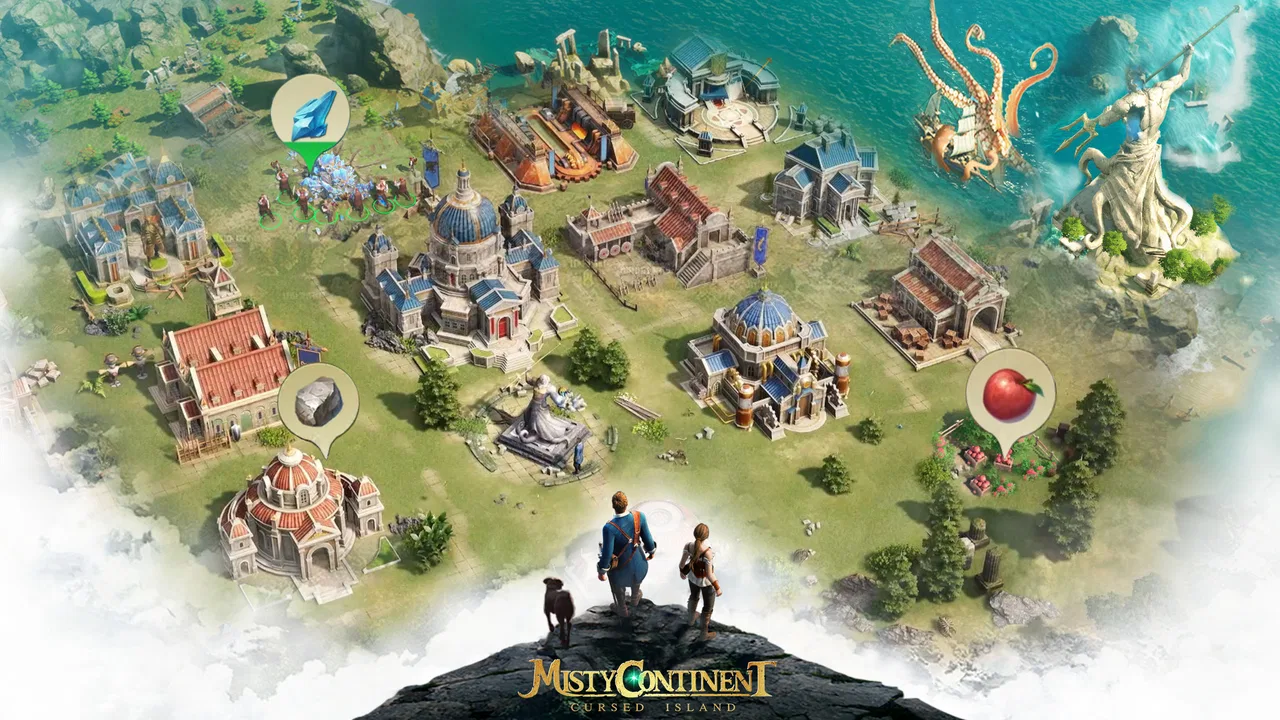
Misty Continent: Cursed Island is a strategy and adventure game set in a mysterious ocean world filled with fog, treasure, monsters, and ancient secrets. You build and upgrade a settlement, gather resources, recruit heroes, explore dangerous islands, and fight enemies. The game combines city development, exploration, puzzles, and real-time or asynchronous multiplayer activities, depending on the available game modes and updates.
02Is Misty Continent: Cursed Island free to download and play?
The game is generally free to download, but it includes optional in-app purchases. You can progress by completing missions, collecting resources, upgrading buildings, and participating in events without paying. However, purchases may provide speed-ups, premium currency, extra resources, or progression advantages. Players who prefer a completely free experience should expect longer upgrade timers and may encounter frequent offers for optional items while playing.
03Does the game require an internet connection?
Yes, Misty Continent: Cursed Island is primarily an online game and normally requires a stable internet connection. Online access is needed to synchronize progress, load events, communicate with the game servers, participate in alliance activities, and access competitive features. Because of this, it is not a suitable choice for fully offline play. Performance can also be affected by weak Wi-Fi, mobile data limitations, or server maintenance.
04Is Misty Continent: Cursed Island suitable for children?
The game is presented in a fantasy style, but it includes battles, monsters, strategic conflict, chat features, advertising-style purchase prompts, and optional in-app spending. Parents should check the official age rating for their child’s device and review the available parental controls. If children play, it is advisable to disable unauthorized purchases and supervise social interactions, especially when the game includes alliances, messaging, or competitive multiplayer content.
05What devices can run Misty Continent: Cursed Island, and how much storage is needed?
Misty Continent: Cursed Island is available for supported Android and iOS devices, but compatibility may vary according to the operating system version, hardware, and regional store listing. The initial download is only part of the required space because additional assets and updates may be installed after launching the game. Before downloading, check the store requirements, keep extra free storage available, and use Wi-Fi if your mobile data plan is limited.
Pros
- Strategic base building blends well with exploration and resource management.
- The nautical setting gives the game a distinctive atmosphere and visual identity.
- Multiple upgrade paths offer useful choices for developing your settlement and heroes.
- Alliance features add cooperation and shared objectives beyond solo progression.
- Regular missions provide clear short-term goals for casual play sessions.
Cons
- Progress can feel slow without frequent logins or spending on premium resources.
- The interface is crowded
- especially when several events and offers appear at once.
- Combat relies heavily on automated systems
- limiting direct player control.
- Large power gaps may make competitive modes frustrating for newer players.
- Many upgrades require waiting timers that interrupt the pace of exploration.

Misty Continent: Cursed Island
Gallery